

New WOF Rules
Posted November 4, 2026
From the 1st of November 2026, the Warrant of Fitness system changes more than it has in decades. Many cars will need a warrant every two years instead of every year, older vehicles move off six-monthly inspections, and the fines for an expired warrant and unsafe tyres both go up.
It is also being phased in, which means two cars parked side by side can end up on different schedules. Here is what is changing, who it applies to, and how to work out where your own car sits.
What is changing
The new inspection frequencies for light vehicles are:
New vehicles: the second WOF moves from three years after first registration to four years.
Vehicles between four and 14 years old: move from an annual WOF to one every two years, phased in by first registration date (see below).
Vehicles between 14 and 26 years old: no change. Still an annual WOF.
Vehicles first registered before 1 January 2000: move from six-monthly to annual.
Motorcycles first registered before 1 January 2000: also move from six-monthly to annual.
The inspection itself is also gaining a new check. Where a vehicle is fitted with automatic emergency braking or lane keep assist, the inspector will check that no warning or malfunction light is showing for those systems. (link to other blog)
The phase-in: it depends on your first registration date
The move to two-yearly warrants does not happen for every four to 14-year-old car at once. It is based on when the vehicle was first registered.
First registered on or after 1 November 2019: two-yearly WOFs from 1 November 2026.
First registered between 1 November 2013 and 31 October 2019: stays annual for now, and moves to two-yearly from 1 November 2027.
First registered before 1 November 2013: stays annual.
So when is your next warrant due?
Your current warrant is not affected. Whatever date is on the label in your windscreen is still the date it expires, and you will need a new one by then.
The change shows up at your next inspection. If your vehicle qualifies for the longer interval at that point, the new warrant will be issued for the longer period. If it does not qualify yet, you will get an annual warrant as usual.
To work out which applies to you:
- Check the label on your windscreen for your current expiry date.
- Find your first registration date on your registration papers or registration label on the windscreen.
- Match it against the dates above.
The fines are going up too:
Alongside the frequency changes, two infringement fees rise on 1 November 2026:
- Driving on a warrant expired by more than two months: from $200 to $350.
- Unsafe wheels or tyres: from $150 to $350, with a maximum court-imposed fine of $1,000.
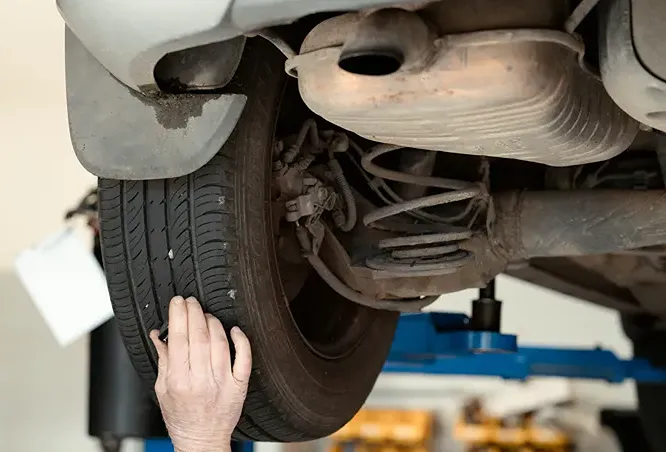
The tyre fine matters more than it might look, because it is not tied to your warrant at all. A car with a valid WOF can still be fined if its tyres have worn below the legal limit since the inspection. With up to two years between warrants, that is a lot more KMs for tyres to wear through.
What does not change
This is the part that gets lost in the headlines. Your vehicle has to be safe and in warrantable condition every time it is on the road, not only on the day it is inspected. That rule has not changed.
What has changed is how often someone else checks it for you. With an annual warrant, an inspector was looking at your brakes, tyres, lights and steering at least once a year. With a two-yearly warrant, the gap between those checks doubles, and the job of noticing what wears in between falls more on you and on your regular servicing.
A service covers most of what a WOF looks at, so if your car is moving to two-yearly warrants, keeping up an annual service is the simplest way to fill the gap. We go into that in more detail in our post on why regular servicing matters more now.
Frequently asked questions
- Does my current warrant last longer now? No. Your existing warrant expires on the date on the label. The new interval only applies to warrants issued after the change applies to your vehicle.
- My car is eight years old. Why am I still on an annual warrant? If it was first registered before 1 November 2019, it moves to two-yearly from 1 November 2027 rather than this year.
- Is the inspection any different? Mostly no, with one addition: if your car has automatic emergency braking or lane keep assist, the inspector will check there is no warning light showing for them.
- Does a two-yearly warrant mean my car only needs looking at every two years? No. Tyres, brakes, wipers and bulbs wear on their own schedule, not the warrant's. A regular service in between is the best way to stay on top of them.
- What if my car fails? We explain what needs fixing before any work starts. Most repairs can be done here, usually the same day, and you have 28 days to have it rechecked.
Book your WOF Addington
Matipo Garage is an NZTA-approved WOF testing station located at 16-18 Lowe Street, Addington, looking after Christchurch drivers since 1929. Open Monday to Thursday 7.30am to 5.30pm, Friday until 5pm.
Call 03 348 5358 or book online, and get it off your list before the holidays start.