

Car Safety Tech and Your WOF
Posted November 16, 2026
Most cars sold in the last few years can brake on their own, nudge you back into your lane, and warn you about the car in your blind spot. Until now, none of that has been part of a Warrant of Fitness.
From 1 November 2026, that starts to change. For the first time, the WOF will include a basic check on two driver assistance systems. Here is what that means, what it does not mean, and what to do if a warning light is already on.
Which systems are being checked
The new check covers two systems, only on vehicles that have them fitted:
- Automatic emergency braking (AEB). Uses a camera, radar or both to watch the road ahead, and applies the brakes if it detects you are about to hit something and you have not reacted.
- Lane keep assist. Uses a camera, usually mounted behind the windscreen, to read the lane markings and steer you back if you start drifting out of your lane.
If your car does not have either system, nothing changes for you.
What the inspector will actually check
The check is about warning lights. The inspector will look for any warning or malfunction indicator showing for AEB or lane keep assist. If the car is telling you one of those systems has a fault, that is now something that can fail a warrant, in much the same way an airbag warning light can today.
What it is not is a full test of the system. Nobody is going to drive your car at a cardboard box to see whether it stops. The inspection relies on the car's own self-checking: if the system has detected a problem, it should be showing a light.
NZTA has said more detail on how these checks are carried out will follow, so we will update this post when we have it.
What can trigger a warning light
These systems depend on cameras and sensors being clean, undamaged and pointed in exactly the right direction. A few common things can upset them:
- A replaced windscreen. On many cars the lane keep camera is mounted to the glass. After a new windscreen, the camera often needs to be recalibrated with specialist equipment so it is looking where it should.
- Front-end repairs. Radar sensors are often behind the badge or in the bumper. A minor nudge or a bumper repair can knock them out of alignment.
- Dirt, ice or stickers. Anything covering the camera or sensor can make the system switch itself off and show a warning.
- Suspension or alignment work. On some vehicles, changes to ride height or wheel alignment affect how the camera sees the road.
- Electrical faults. Like any other system on a modern car, a sensor or module can simply fail.
If a warning light is on now, get it looked at before your WOF
A warning light is your car telling you something. Sometimes it is minor, like a dirty sensor. Sometimes the system has stopped working altogether, and you have been driving without a safety feature you thought you had.
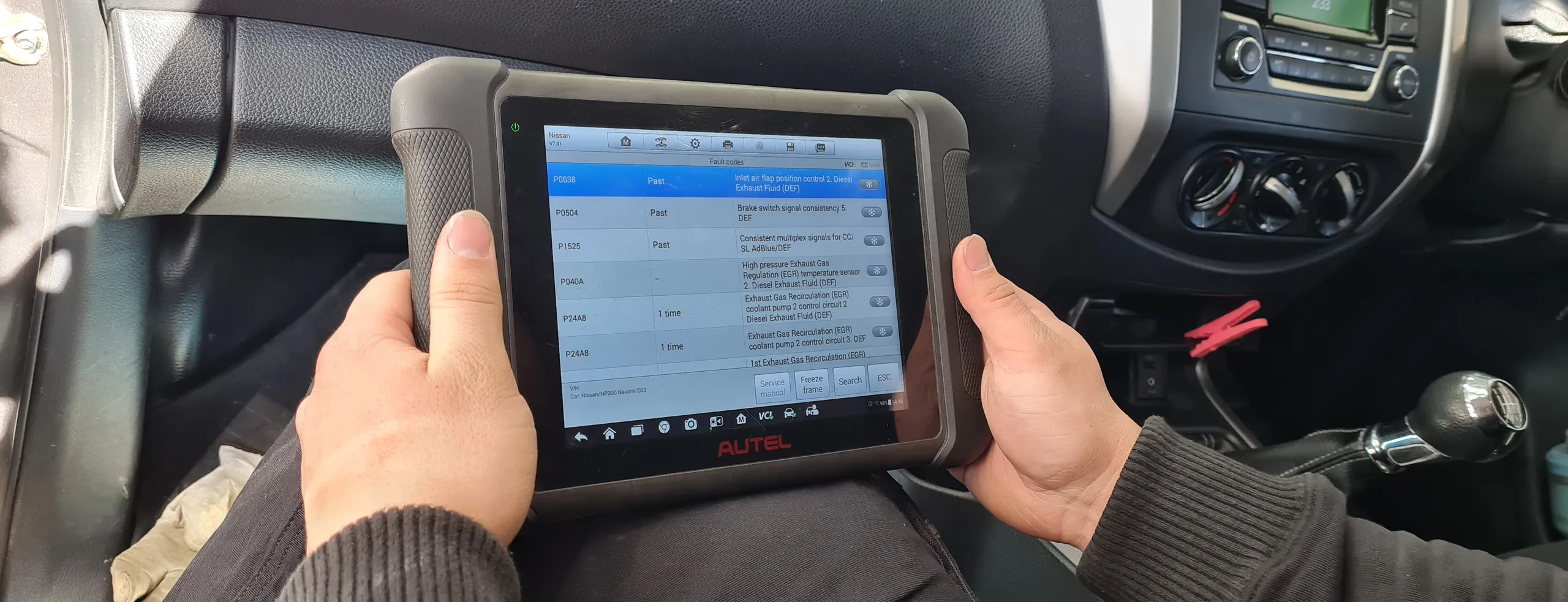
Either way, the time to find out is before your warrant, not during it. A scan will tell us what fault code the car has stored, and the experience is in knowing what that code means and what it actually takes to fix it. If it needs calibration equipment we do not have, we will tell you so and point you to someone who does.
The systems that are not part of the check still matter
Many cars also have blind spot monitoring, adaptive cruise control, parking sensors and rear cross-traffic alerts. None of these are part of the new WOF check. That does not mean a fault in them is nothing to worry about, especially if you have got used to relying on them. If any of them is showing a warning, it is worth having it checked.
Why this matters more with two-yearly warrants
Many of the cars fitted with these systems are newer vehicles, and they are exactly the ones moving to a warrant every two years. That is a long time to drive around with a safety system switched off without knowing it. Having it looked at during a regular service means a fault gets caught when it appears, not up to two years later.
Frequently asked questions
- Will my car fail a WOF if it does not have AEB or lane keep assist? No. The check only applies to vehicles that have those systems fitted.
- Will the inspector test whether my AEB actually works? No. The check is for warning or malfunction lights, not a full test of the system.
- I had my windscreen replaced and now there is a light on. What do I do? Go back to whoever fitted the windscreen first, as the camera may need recalibrating. If you are not sure what the light means, we can scan the car and tell you.
- Can I just turn the system off? Many cars let you switch lane keep assist off for a drive, but that is not the same as fixing a fault. A malfunction light means the car has detected a problem with the system itself.
- When does this start? From 1 November 2026, for both WOF and CoF inspections.